
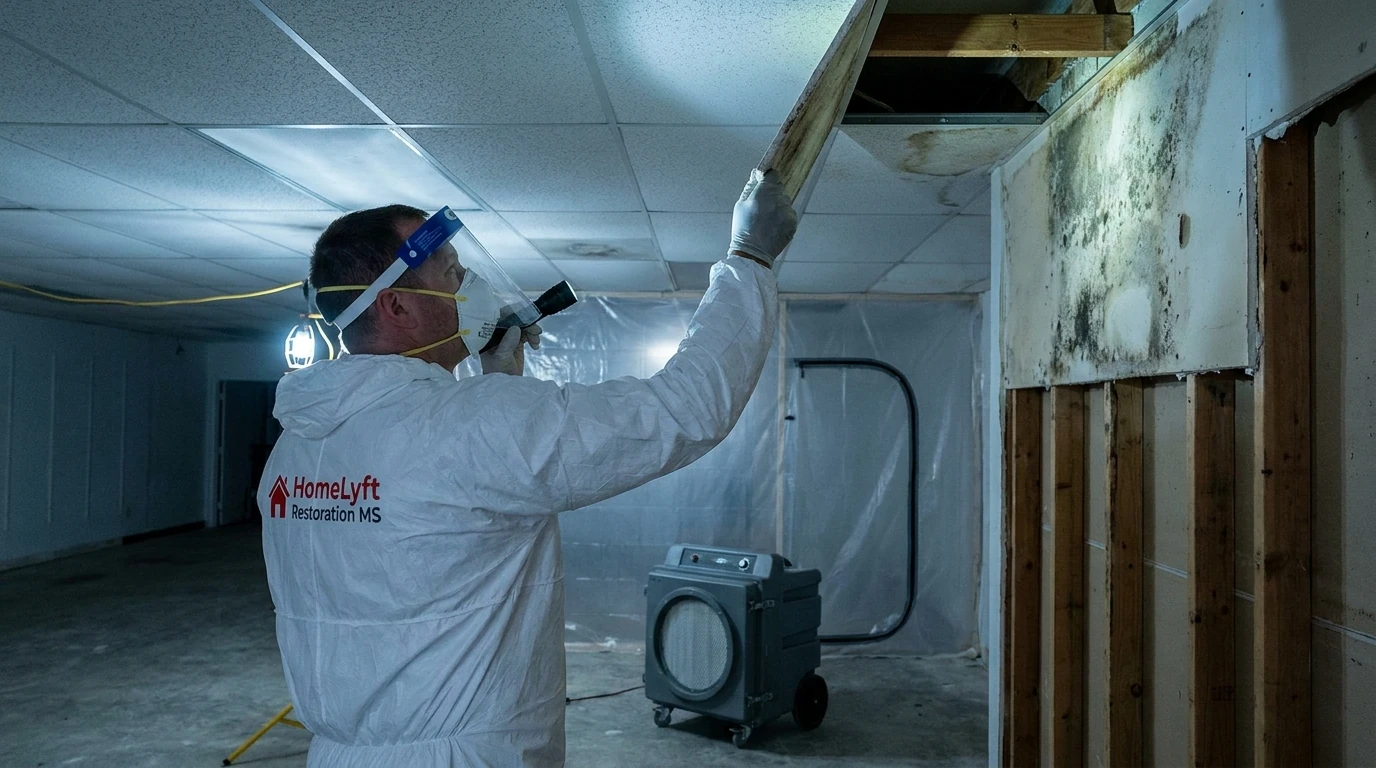
TL;DR: Commercial mold remediation is the process of containing, removing, and cleaning mold-contaminated materials in a business property, following the IICRC S520 standard for commercial and industrial structures. It typically includes a moisture-source inspection, containment with negative air pressure, removal of unsalvageable porous materials, HEPA cleaning, and a post-remediation verification test. For a contained area of 1,000 to 3,000 square feet, the work usually runs 3 to 7 business days; larger or heavily contaminated spaces take longer.
If a tenant at your Pass Road retail strip has complained about a musty smell coming from behind a drop ceiling, or your facilities team found dark staining spreading across a stockroom wall after last year’s storm season, you’re probably trying to figure out how fast this can get fixed without shutting the whole building down. Commercial mold remediation moves differently than a residential job. It has to work around business hours, multiple tenants, lease deadlines, and insurance documentation. Here’s how the process actually works and what moves the cost.
What Does Commercial Mold Remediation Involve?
Commercial mold remediation means isolating the contaminated area, removing moisture-damaged materials, and cleaning the surviving structure and contents below a safe spore threshold, following the IICRC S520 standard for mold remediation in commercial and industrial structures. It is a structured protocol, not a one-time spray-and-wipe service.
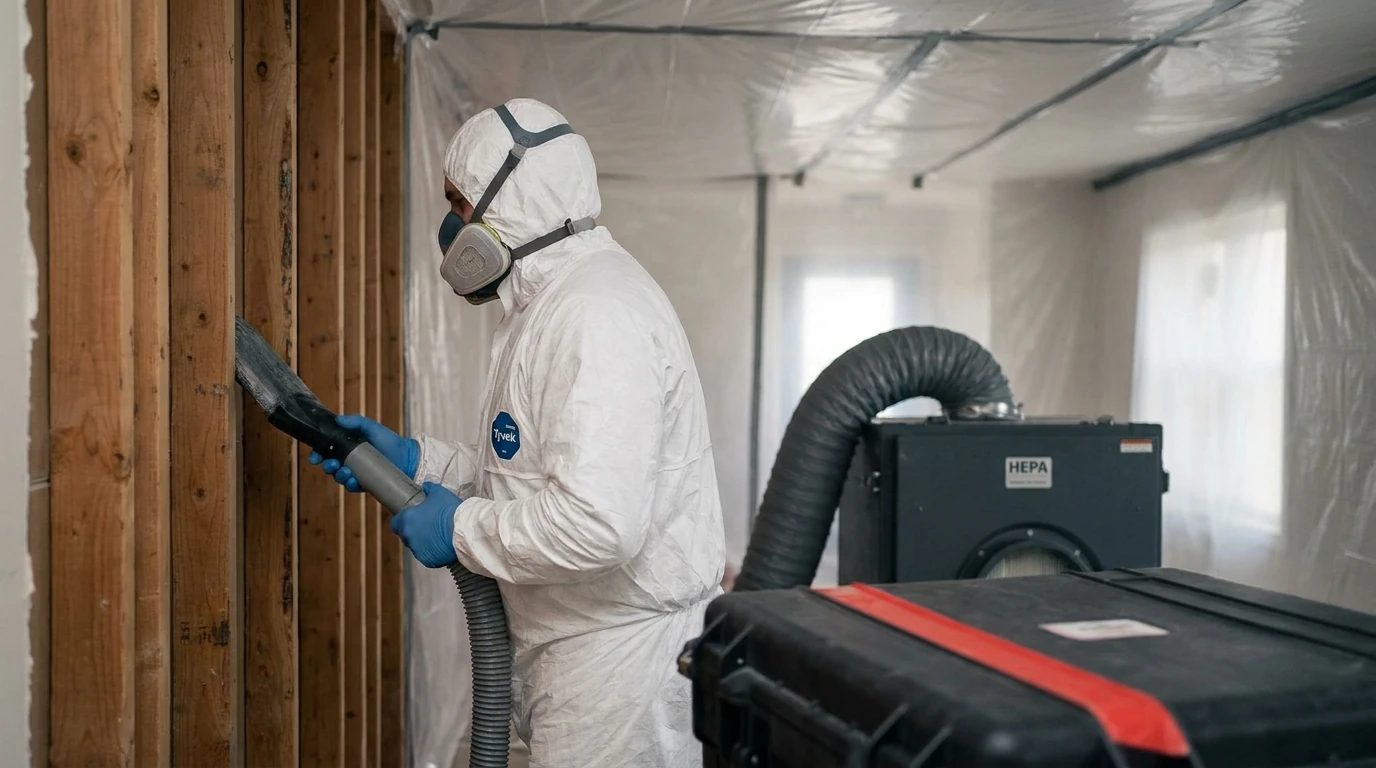
A crew builds physical containment with poly sheeting and sets up negative air pressure using a HEPA air scrubber so spores don’t migrate into occupied suites, hallways, or shared HVAC returns. That last part matters more in commercial buildings than homes: one contaminated mechanical room can cross-contaminate an entire strip center through a shared duct run if containment isn’t sealed at the register level.
Unsalvageable porous materials (soaked drywall, insulation, carpet, ceiling tile) get removed and bagged for disposal. Non-porous and semi-porous surfaces (studs, concrete, some millwork) are HEPA-vacuumed and treated with an EPA-registered antimicrobial. Once the structure is dry and clean, an independent hygienist performs post-remediation verification (clearance testing) before containment comes down. The EPA recommends this kind of third-party clearance specifically so the people who did the removal aren’t the same people grading their own work.
How Long Does Commercial Mold Remediation Take?
Most contained commercial mold jobs take 3 to 7 business days from containment build to clearance test, assuming the moisture source has already been identified and stopped. Larger floor plates, multiple affected suites, or hidden growth behind finished walls extend that window.
A typical sequence looks like this:
- Day 1: Inspection and containment. Moisture mapping with a meter or thermal camera, scope of work documented in writing, containment and negative air set up.
- Days 2 to 4: Removal and HEPA cleaning. Damaged materials removed, remaining surfaces HEPA-vacuumed and treated, air scrubbers run continuously.
- Day 5: Drying confirmation. Moisture readings confirmed at or near ambient before any rebuild begins.
- Days 6 to 7: Clearance testing and teardown. A third-party hygienist collects air or surface samples; once results pass, containment comes down and the space is ready for rebuild or re-occupancy.
The moisture source has to be fixed before or during this process, not after. If a roof leak, a failed HVAC condensate line, or slab moisture intrusion is still active, remediation is temporary. A second storm season will bring the problem right back.
What Mistakes Do Property Managers Make With Commercial Mold?
The most common mistake is painting or caulking over visible growth instead of removing it, which traps moisture behind the surface and lets it spread unseen. Mold-resistant paint is a finishing step, not a remediation method.
Other patterns worth watching for:
- Treating it as a cleaning problem instead of a moisture problem. Bleach kills surface growth but does nothing for the moisture source or for mold that has colonized porous material underneath.
- Ignoring shared HVAC paths. In a multi-tenant building, a mold problem in one suite’s mechanical closet can become every tenant’s problem if the system isn’t isolated during work.
- Skipping written documentation. Commercial insurers and landlords both expect a dated scope of work, moisture readings, and photos. Without that paper trail, disputing a claim or a lease liability question gets much harder.
- Choosing on price alone and skipping clearance testing. A remediation job that ends without independent verification leaves you with no proof the space is actually safe to reoccupy, which matters if a tenant or health inspector asks later.
If you want to understand how to tell a surface mold problem from something more serious before you call anyone, our guide on black mold vs regular mold and how to test for mold walk through what the different growth patterns actually mean.
How Do You Choose a Commercial Mold Remediation Company?
Look for a firm that can show IICRC AMRT (Applied Microbial Remediation Technician) certification, a written scope of work before anything is removed, and third-party clearance testing as a standard part of the job, not an upsell. Those three things separate a documented, defensible remediation from a crew that shows up with bleach and a shop-vac.
For multi-tenant commercial properties, ask specifically how they plan to isolate the HVAC system and how they’ll schedule around occupied suites or business hours. A company used to residential jobs may not have a plan for either. HomeLyft Restoration MS is an IICRC Certified Firm with AMRT-certified technicians and handles commercial mold remediation across Gulfport, Biloxi, Gulf Hills, and the surrounding Mississippi Gulf Coast, coordinating around tenant schedules and insurance documentation from the first inspection.
If you’re still weeding through options generally, our post on choosing a restoration company covers the credential and contract questions worth asking any contractor, not just ours.
If you’re dealing with a musty smell, visible staining, or a failed inspection in a Gulfport-area commercial property, the next step is a documented moisture and mold inspection before anyone touches the space. Call HomeLyft Restoration MS at (228) 284-5200 to schedule one.
About HomeLyft Restoration MS
HomeLyft Restoration MS is an IICRC Certified Firm serving Gulfport, Mississippi and the surrounding Gulf Coast since 2022, with AMRT-certified mold remediation technicians and license RO 2728. The company holds a 5.0 Google rating across 64 reviews and operates on a 24/7 response schedule, handling mold remediation, water damage, fire damage, and reconstruction for residential and commercial properties across the region.