
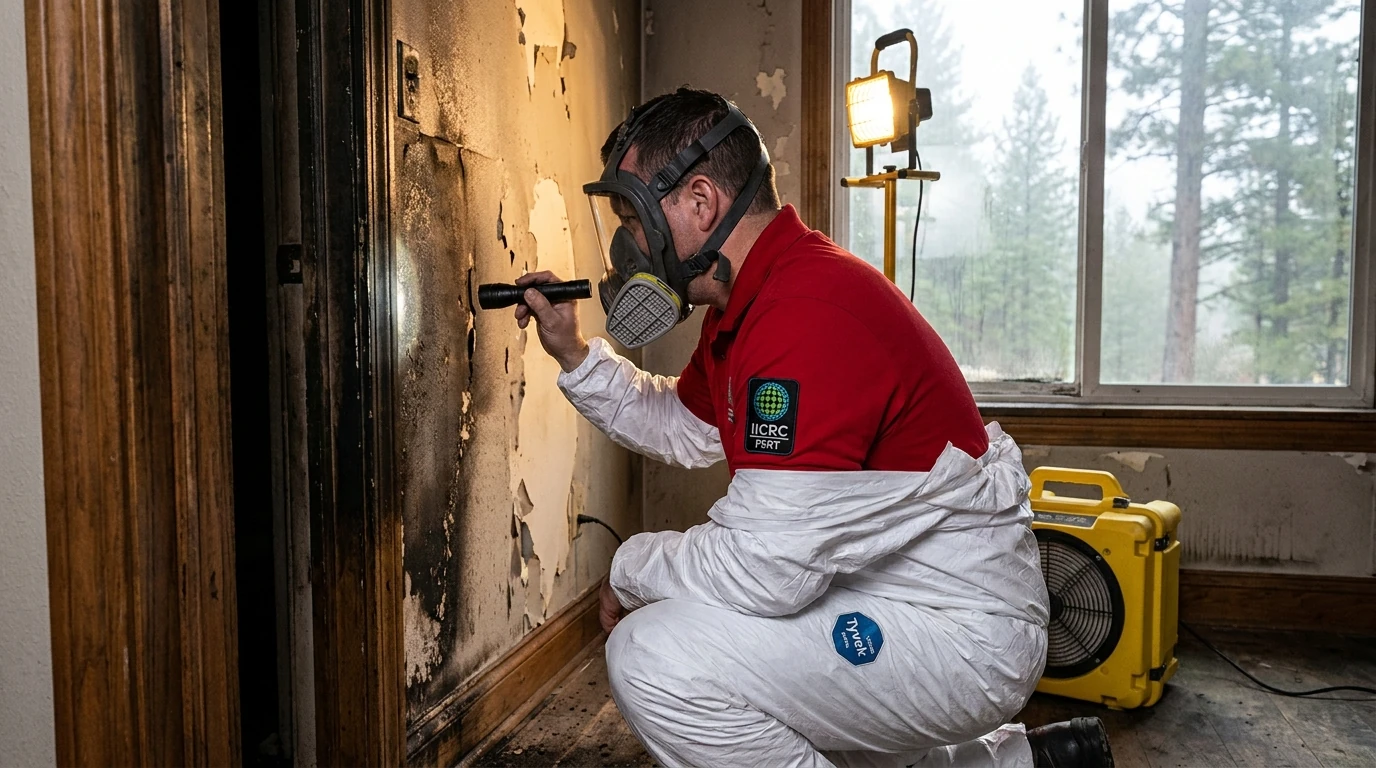
TL;DR: If a fire damaged your Gulfport home, the first 24 hours determine how much smoke and soot residue sets permanently into drywall, flooring, and fabric. Call your insurance carrier right away, secure the structure against weather and intruders, and avoid cleaning soot yourself with household products, since that can grind it deeper into surfaces. A licensed fire damage restoration company documents the loss, stabilizes the structure, and begins structural drying and soot removal the same day.
If the fire department just left your kitchen, garage, or attic with hoses coiled up and the smell of smoke already soaking into every room, you’re probably standing in scorched drywall wondering what happens next. Maybe the fire marshal cleared the structure but your adjuster hasn’t called back yet. Here’s what actually needs to happen in the next few hours, what the restoration process looks like, and how Mississippi homeowners’ policies typically respond to a fire claim.
What Should You Do in the First 24 Hours After a Fire?
In the first 24 hours after a house fire, call your insurance company, keep the power off until the utility or an electrician clears it, and board up broken windows or doors before leaving the property unattended overnight.
Do these in order:
- Report the claim same-day. Most policies require prompt notice, and an early claim number speeds up every step after it.
- Photograph everything before you touch anything. Char patterns, water pooling from suppression efforts, and soot streaks all document the loss for the adjuster.
- Don’t run the HVAC system. A running air handler pulls soot particles through the ductwork and spreads them to rooms the fire never reached.
- Don’t wipe soot with water or household cleaners. Wet soot smears and bonds to painted surfaces, turning a cleanable stain into a replacement job.
- Get the structure boarded up or tarped if windows, a roof section, or an exterior wall are open to weather.
What Does the Fire Damage Restoration Process Involve?
Fire damage restoration moves through four phases: emergency mitigation, soot and odor removal, structural drying if firefighting water was used, and reconstruction of damaged framing, drywall, and flooring.
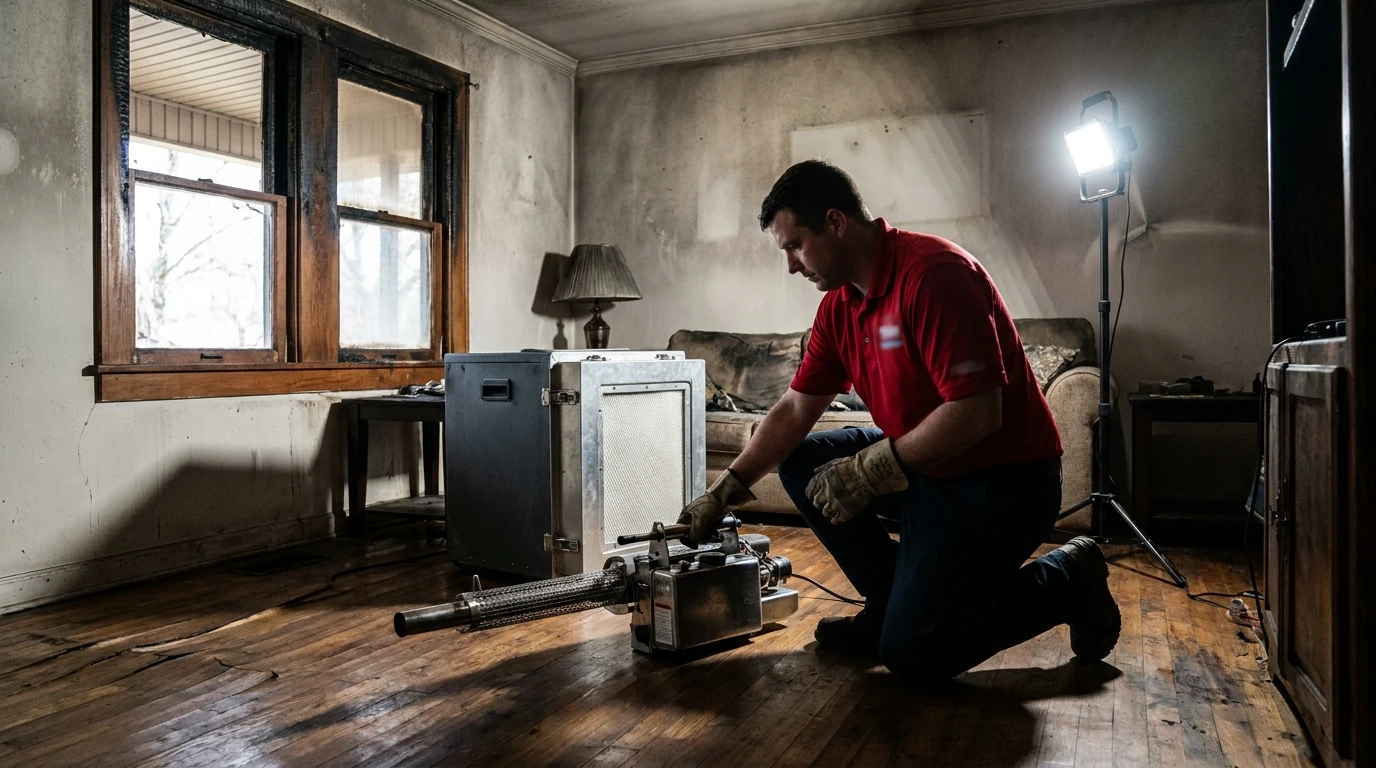
Mitigation happens first, usually within hours of the fire being extinguished: board-up, tarping, and HEPA air scrubbers to stop soot from migrating further through the house. Soot and odor removal follows, cleaning surfaces to the IICRC S700 fire restoration standard, which sets the method and documentation for how soot is tested and removed by material type. If firefighters used water on the fire, structural drying runs alongside the soot work using the same equipment and documentation standard as a water loss. Reconstruction, the last phase, rebuilds whatever had to come out: charred framing, water-damaged subfloor, drywall, cabinetry. Our full walkthrough of the fire restoration process covers each phase in more depth if you want the longer version.
Will Homeowners Insurance Cover Fire Damage Restoration?
Most Mississippi homeowners policies cover fire damage, including smoke and soot cleanup, under the dwelling and personal property sections, but what you actually collect depends on the cause of the fire and whether your policy pays replacement cost or actual cash value.
Actual cash value policies subtract depreciation from what it costs to replace a damaged item or finish; replacement cost policies pay the full cost with no depreciation deducted, though often in two payments. Check your declarations page for which one you carry. Most policies also include Additional Living Expenses (ALE) coverage, which reimburses hotel stays and meals while the home is unlivable, usually for a set number of months or a dollar cap. Keep every receipt. For contents, a documented inventory, photos, and an itemized list of what’s salvageable versus a total loss protects the claim far better than a verbal description to the adjuster. A contents restoration assessment before anything is thrown out gives you that documentation.
Who Should You Call for Fire Damage Restoration in Gulfport, MS?
Call a company that holds IICRC Fire & Smoke Restoration Technician (FSRT) certification and can document the loss in a format your adjuster accepts, then start mitigation the same day. HomeLyft Restoration MS carries FSRT certification along with structural drying and reconstruction capability, and works fire losses from the Bayou View neighborhood down to Jones Park along the Gulfport waterfront.
Ask any company you’re considering for their certification, a written scope before work starts, and whether they coordinate directly with your adjuster. A fire loss involves enough moving pieces, insurance, structural repair, contents, odor, that having one company handle the documentation end to end is worth more than the lowest bid.
Get a fire damage assessment scheduled as soon as the structure is cleared for entry, and confirm your emergency board-up is holding before the next rain moves in off the Gulf.
About HomeLyft Restoration MS
The company is an IICRC Certified Firm (FSRT certified for fire and smoke restoration, license RO 2728) serving Gulfport, Mississippi since 2022. Crews handle fire, smoke, odor, water, storm, mold, and reconstruction work across the Mississippi Gulf Coast, and the business holds a 5.0 Google rating across 64 reviews.
Need help now? Call HomeLyft Restoration MS at +12282845200.