
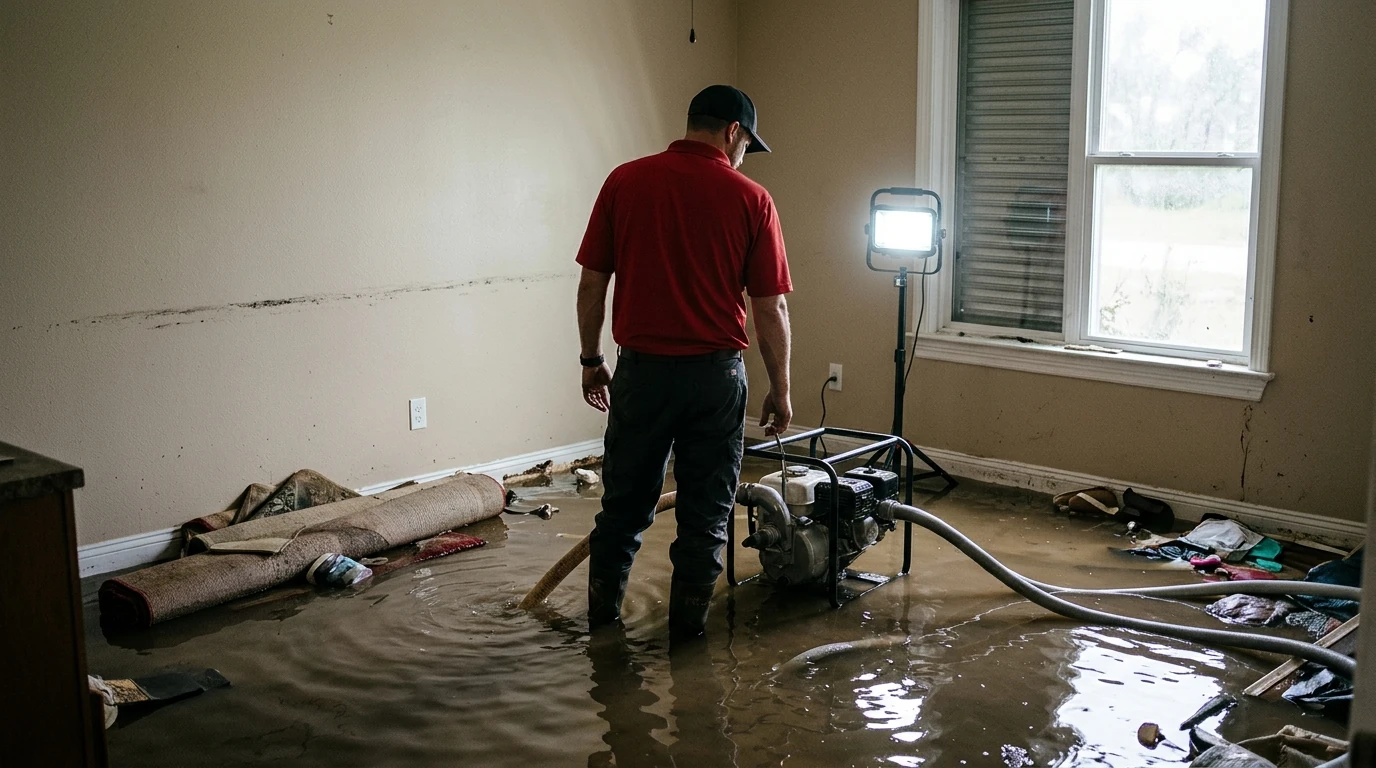
If storm surge pushed water out of Back Bay or over the seawall along Beach Boulevard and into your house, call HomeLyft Restoration Gulfport at (228) 284-5200. They’re an IICRC Certified Firm, answer 24/7, and hold a 5.0 rating across 74 Google reviews from Gulf Coast homeowners who’ve been exactly where you are right now.
That’s the short version. The next few minutes matter more than most people realize, so here’s the order things should happen, starting with staying safe.
What should I do in the first few minutes, before anyone arrives?
Do not walk through standing water until the power is confirmed off at the main breaker, and never touch a breaker panel if it’s wet or already submerged. Storm surge water is an electrocution risk the moment it touches a live outlet or downed line, and it’s a contamination risk regardless.
If you smell gas, or hear a hissing sound near an appliance line, leave the house and call the gas utility or 911 from outside. Don’t flip switches or light anything on the way out.
Treat all surge water as contaminated. It’s picked up yard runoff, septic overflow, and whatever was sitting in storm drains between the Mississippi Sound and your foundation. Don’t let kids or pets wade through it, and wash any skin that touched it with soap and clean water.
Once the house is safe to re-enter, that’s when you call a restoration company, not before.
Should I call my homeowners insurance or my flood insurance carrier first?
Call your flood insurance carrier first if the water came from storm surge, because standard homeowners policies exclude flood damage entirely. Storm surge is surface water pushing in from outside, which is the textbook definition of a flood claim, not a homeowners claim.
This catches a lot of Gulfport homeowners off guard. A standard homeowners policy covers sudden, accidental water damage from inside the home, like a burst pipe, but flood water, including storm surge, requires a separate NFIP or private flood policy. If you have one, that’s who pays for this loss.
Still call your homeowners carrier too, especially if wind or a tree caused separate damage during the same storm. Wind damage and surge damage are often two different claims on two different policies, and documenting both protects you either way.
Start your flood claim directly through the National Flood Insurance Program if you’re NFIP-insured, and ask your agent to confirm your flood deductible before crews begin tearing out materials. HomeLyft can document the loss with photos and moisture readings either way, but they aren’t your insurance company and can’t promise what a flood claim will pay.
Why does storm surge flooding need different cleanup than a pipe burst?
Storm surge water is classified as Category 3, also called black water, which means it’s grossly contaminated and treated differently than a clean water loss from the start. Under the IICRC S500 standard, Category 3 water includes rising water from outside the home, and surge off Back Bay or the Sound qualifies every time, regardless of how clear it looks once it recedes.
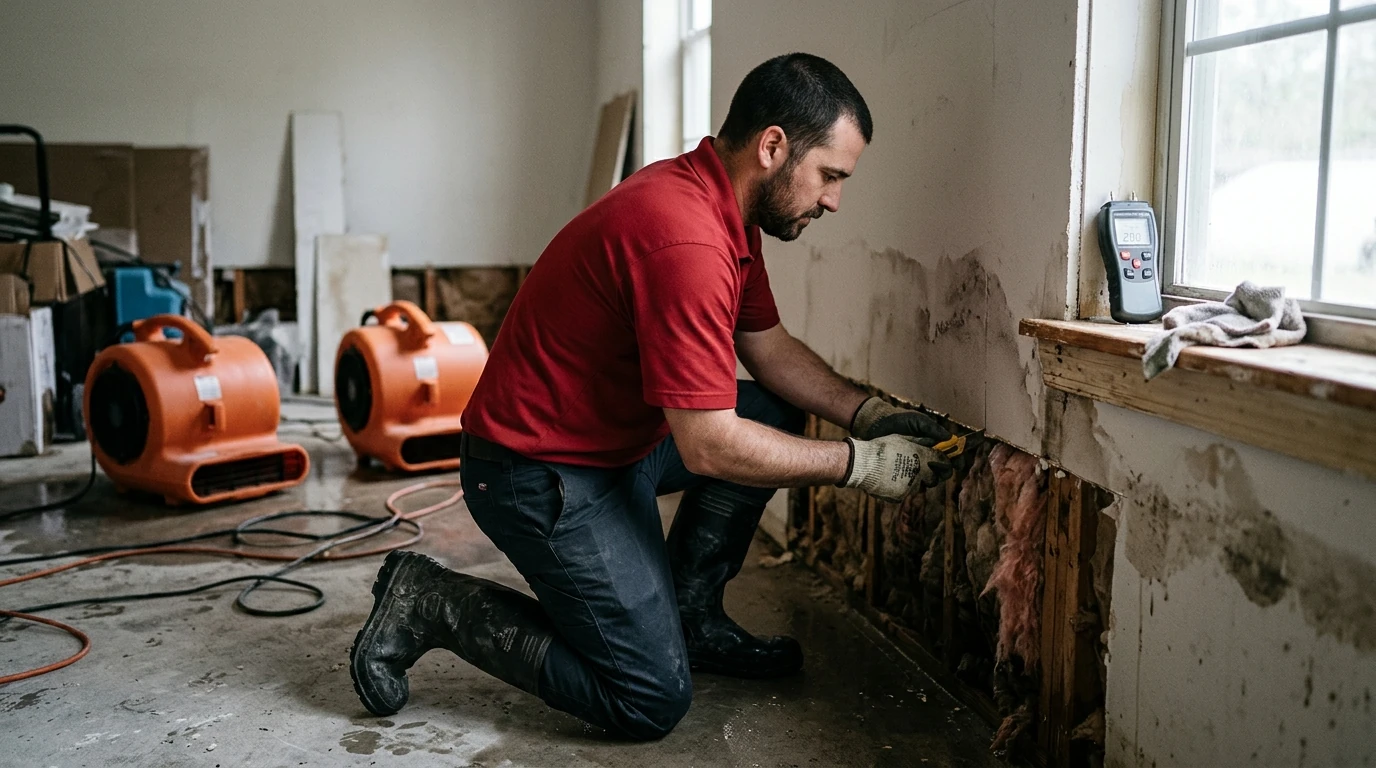
That classification changes the job. Porous materials that touched the water, carpet, carpet pad, baseboards, and often the bottom few feet of drywall, usually get removed rather than dried in place. Hard surfaces get cleaned and treated with an EPA-registered antimicrobial before anything goes back together. Crews working in it wear gloves and, depending on exposure, respiratory protection, because this isn’t a “mop it up and move on” situation.
This is the same reasoning behind our storm damage restoration guide for wind and roof damage from the same storms, it’s just applied to water instead of structure.
What happens when you call HomeLyft Restoration Gulfport?
A crew member walks the affected rooms with a moisture meter, photographs the waterline and affected materials for your claim, and starts extraction the same visit. Extraction removes the standing water with truck-mounted or portable pumps first, because nothing else can start until the bulk water is out.
From there, drying and the Category 3 cleanup run together. IICRC S500 calls for contaminated materials to come out early rather than sit, so a water-damaged room that took on surge water usually sees some demolition, flood cuts along the lower drywall, pulled baseboard, removed flooring, within the first visit or two, not weeks later. Air movers and dehumidifiers go in to dry the remaining structure, typically over the following 24 to 48 hours, with daily moisture checks to confirm it’s actually drying and not just venting warm air over wet wood.
HomeLyft handles this scope under water damage restoration and flood damage restoration, with reconstruction after drying if walls or flooring need to come back. For a fuller walk-through of the first 24 hours after any kind of water event in Gulfport, see our what to do after water damage guide.
How do you stop mold after a surge flood?
Mold can start growing on wet materials within 24 to 48 hours, according to the EPA, which is why fast extraction and drying matter more than almost anything else in this process. Removing the contaminated porous materials early, rather than trying to dry them, also removes the food source mold needs to take hold.
If drying gets delayed, even by a day or two of waiting on an adjuster, check return visits for musty odor, discoloration behind baseboards, or soft drywall in the days after. Our mold after a hurricane post covers what to watch for in the weeks following a surge event, and HomeLyft’s mold remediation team handles it under full containment if it shows up.
Once drying is confirmed complete with moisture meter readings, not guesswork, rebuilding can start: new drywall above the flood cut line, new baseboard, flooring back down. That’s reconstruction work, and it’s worth getting a written scope before anything goes back together so the repair matches what your flood claim actually approved.
About HomeLyft Restoration Gulfport
HomeLyft Restoration Gulfport is an IICRC Certified Firm (license RO 2728) serving Gulfport and the Mississippi Gulf Coast, including Biloxi, Ocean Springs, D’Iberville, Pascagoula, Bay St. Louis, and Waveland, since 2022. Its technicians hold IICRC WRT, ASD, AMRT, and FSRT certifications, and the company answers calls 24/7 with a 5.0 rating across 74 Google reviews. Crews handle water damage restoration, storm damage restoration, mold remediation, and reconstruction for homes affected by Gulf Coast storm surge and tropical weather. Learn more at homelyft.net.