
TL;DR: Reconstruction is the rebuild phase of a restoration project, the stage after water, fire, or storm damage has been mitigated and dried or cleaned. It covers framing repairs, drywall, flooring, paint, trim, and cabinetry, returning the structure to pre-loss condition. In Biloxi, where Gulf humidity and storm exposure are constant factors, reconstruction typically runs a few weeks for a single room and several months for a whole-house rebuild, and most of it is covered by a homeowner’s insurance policy if the triggering event was sudden and covered.
If your Biloxi home just finished the drying-out or cleanup phase after a burst pipe, a kitchen fire, or wind and rain damage from a Gulf storm, you’re probably staring at open studs, missing drywall, or a subfloor with no finish on it and wondering what comes next. That next phase has a name: reconstruction. It’s a distinct step with its own contractors, its own timeline, and its own insurance paperwork, separate from the mitigation work that dried out or cleaned up the property.
What Is Reconstruction, and How Is It Different From Mitigation?
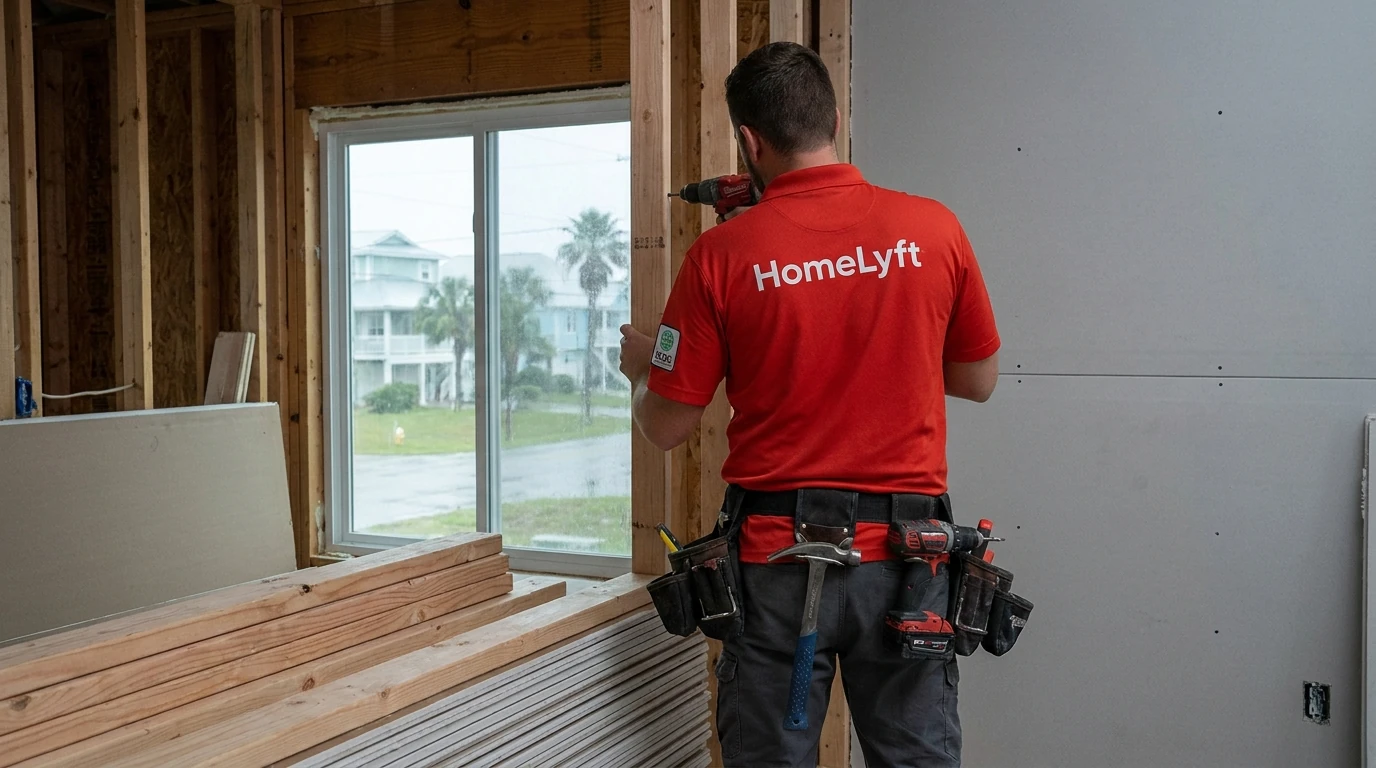
Reconstruction is the rebuilding work that restores a structure to its condition before the damage, while mitigation is the emergency work that stops damage from getting worse. Mitigation crews extract water, run air movers and dehumidifiers, remove soot, or board up a breached roof. Reconstruction crews come in after that: they hang new drywall, replace flooring, repaint, rebuild cabinetry, and reframe any structural wood that had to be cut out.
The two phases often get bundled under one contract with restoration companies that handle both, which is worth asking about directly. A firm that only mitigates will hand you off to a general contractor for the rebuild, adding a second bidding process and a second point of coordination with your insurance adjuster. A firm that does both, drying under the IICRC S500 water damage standard and then rebuilding under a general contracting license, keeps one point of contact and one continuous scope of work.
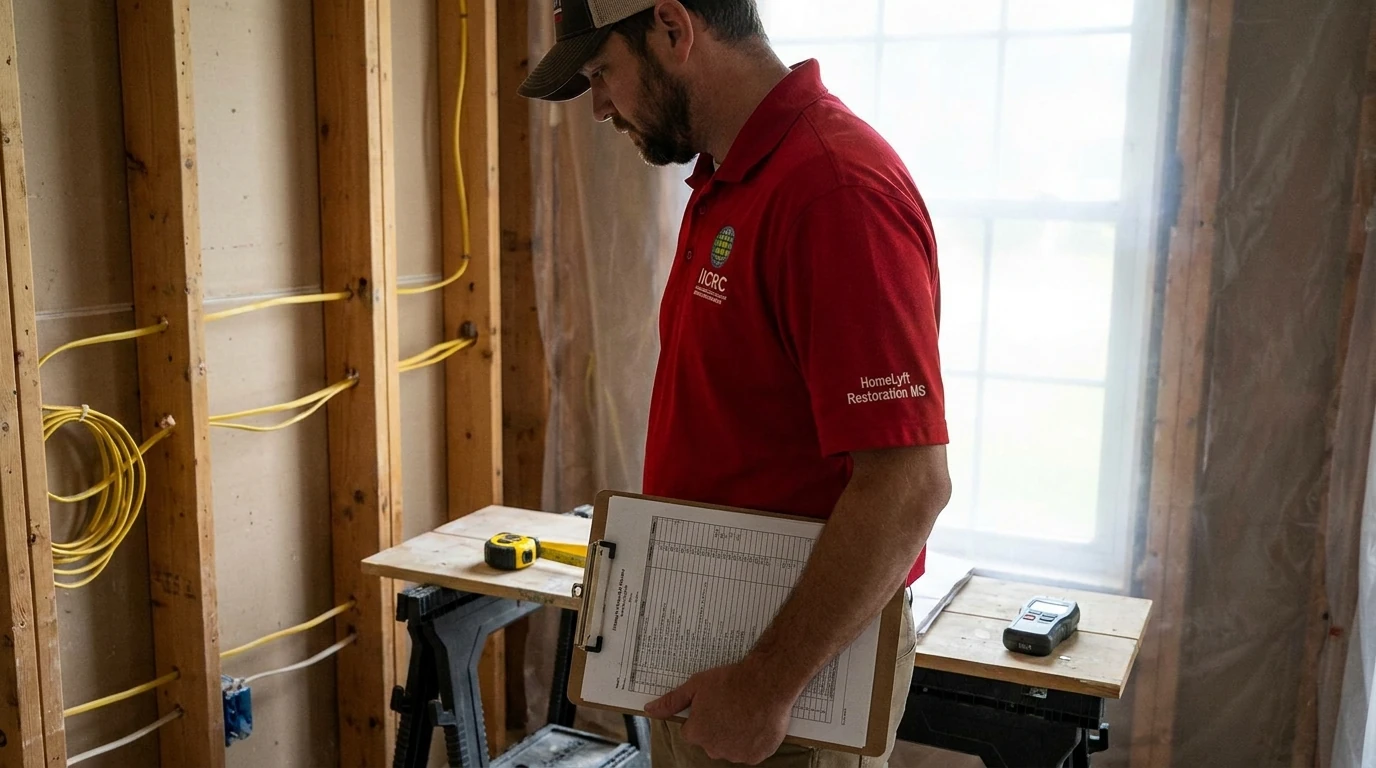
In practice, reconstruction starts only after moisture readings confirm the structure is dry, or after a fire-damaged area has been cleared by an industrial hygienist if testing was required. Starting drywall or flooring too early traps moisture behind new materials, which is one of the most common and expensive mistakes in a rushed rebuild.
What Does the Reconstruction Process Actually Look Like?
Reconstruction follows a sequence: demolition of damaged materials, structural framing repair, rough-in (electrical, plumbing, HVAC as needed), drywall and insulation, then finishes like flooring, paint, trim, and fixtures. Each stage typically requires its own inspection before the next can start.
For a Biloxi property, that sequence usually plays out like this:
- Scope and estimate. A project manager documents every damaged material, from subfloor to ceiling joists, and writes a line-item scope your insurance adjuster can compare against their own estimate.
- Demolition. Anything that can’t be dried or cleaned, think water-swollen baseboards, char-damaged studs, or mold-affected drywall, comes out down to sound material.
- Structural and rough-in work. Framing is repaired or replaced, and any electrical or plumbing lines that ran through the damaged area are brought back up to current code.
- Drywall, texture, and paint. New drywall is hung, finished, and painted to match the rest of the home.
- Flooring and trim. Flooring, baseboards, door casings, and cabinetry go back in last, since they’re the most visible finish layer.
- Final walkthrough. You and the project manager inspect the completed work against the original scope before sign-off.
A single room, like a bathroom after a supply-line failure, can move through this sequence in two to four weeks. A whole-house rebuild after a major storm event, with multiple rooms affected, roof decking replaced, and HVAC rerouted, can run three to six months depending on permitting and material lead times along the Gulf Coast.
For homes near Back Bay or Point Cadet that took on wind-driven rain damage to the roof deck along with interior flooding, reconstruction often overlaps with roofing work. If your roof needs replacement as part of the same claim, that’s a coordinated scope rather than a separate project, and our past post on roofing after storm damage walks through how that claim process typically works.
Does Insurance Cover Reconstruction, and What Should You Watch For?
Most homeowners and commercial property policies cover reconstruction when the underlying cause of loss, like a burst pipe, a kitchen fire, or wind damage from a named storm, is itself a covered peril. The insurer typically pays replacement cost for the rebuild, sometimes in two payments: an initial actual cash value payment, then a second payment once the work is complete and documented.
The gap homeowners get caught in is code-upgrade cost. If your home was built before current Mississippi building codes and the damaged section has to be rebuilt to today’s code, standard policies may only cover part of that upgrade unless you carry an ordinance-or-law endorsement. It’s worth checking your declarations page for that line item before reconstruction starts, not after.
The other common gap is scope disagreement. Adjusters write estimates from photos and software pricing models; contractors write them from what they can see once demolition opens the walls. A detailed, line-item scope with photos at each stage, which is what a reconstruction crew experienced with Mississippi claims should be producing as a matter of course, is what closes that gap without a drawn-out supplement fight.
How Do You Choose a Reconstruction Contractor in Biloxi?
Look for a contractor who is licensed for general contracting work in Mississippi, carries liability insurance, and can produce a written scope before any demolition starts. Ask specifically whether they handle both the mitigation and the rebuild, or only one half of the job.
A contractor without a current state license can’t legally pull building permits on larger jobs, which stalls your project at the inspection stage. Ask to see the license number up front, and confirm it’s active with the Mississippi State Board of Contractors. Ask too whether the crew doing your drywall and framing is the same crew that dried the structure, or a separate subcontractor they’re coordinating, since more handoffs usually mean more delay.
If your property is near Keesler Air Force Base or further along Beach Boulevard where salt air and humidity are constant, ask how the rebuild plan addresses moisture resistance in the materials selected, not just matching what was there before. A straight like-for-like rebuild in a high-humidity coastal zone can set you up for the same problem again in a few years.
HomeLyft Restoration MS handles reconstruction as part of our general contracting scope, picking up where water, fire, and storm damage mitigation ends. If you’re at the point where demolition is done and you need a written rebuild scope for your adjuster, request a reconstruction estimate and we’ll walk the property with you before any work starts.
About HomeLyft Restoration MS
HomeLyft Restoration MS is an IICRC Certified Firm serving Gulfport, Biloxi, and the Mississippi Gulf Coast since 2022 (license RO 2728). Their technicians hold IICRC credentials in water restoration, structural drying, fire and smoke restoration, and mold remediation, along with EPA Lead-Safe certification and Fortified roofing certification for Mississippi windstorm standards. The company operates 24/7 and coordinates mitigation and reconstruction under one scope of work for residential and commercial properties across the region.