
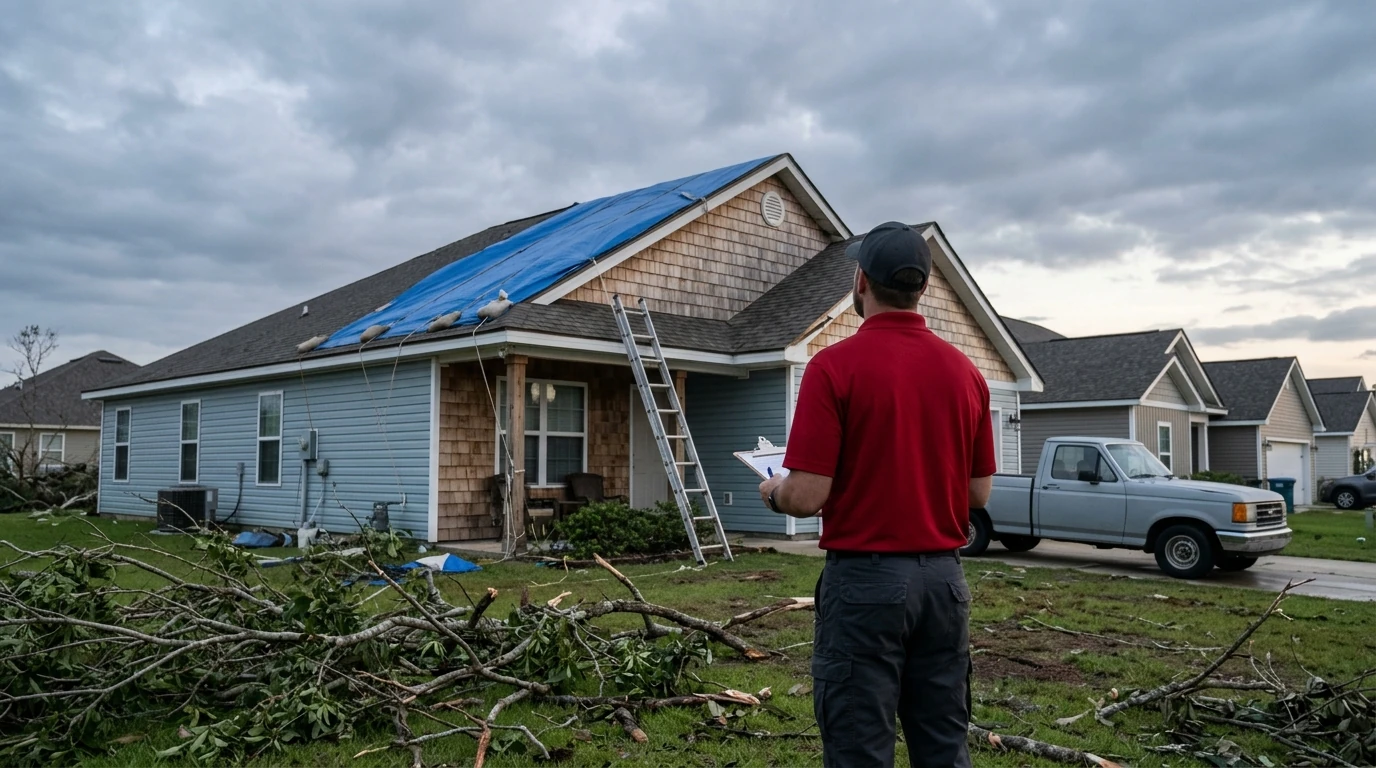
TL;DR: Storm damage restoration in Gulfport, MS typically runs $3,500 to $25,000 for a single-family home, depending on whether the damage is wind, water, or both. Emergency tarping or board-up alone usually costs $300 to $1,500. A full rebuild after major wind and flood damage can reach $40,000 or more. Wind damage is usually a homeowners or windpool claim; flood damage needs a separate NFIP policy, since standard homeowners insurance does not cover rising water.
If a named storm just tore shingles off a roof near Pass Road or pushed storm surge into a ground-floor unit close to Gulfport Harbor, you’re likely dealing with two separate problems at once: wind damage and water intrusion, and you want a number before the adjuster even calls back. The honest answer is that storm damage pricing in Harrison County depends on which of those two problems you actually have, because they’re often billed, and insured, completely differently.
How much does storm damage restoration cost in Gulfport, MS?
Most Gulfport homeowners pay between $3,500 and $25,000 for storm damage restoration, with the final number driven by whether the loss involved wind only, water only, or a combination of both plus structural rebuild.
A single tarped roof after a wind event might run under $1,000 total. A home that took on storm surge or wind-driven rain through a compromised roof, with drywall, flooring, and insulation needing replacement, climbs quickly once drying equipment, demolition, and rebuild labor are added. Here’s how the costs typically break down by phase:
| Scenario | Typical Cost Range |
|---|---|
| Emergency roof tarp (single-family) | $300 - $900 |
| Emergency board-up (per window or door opening) | $150 - $600 |
| Water extraction and structural drying (per affected room) | $1,200 - $3,500 |
| Storm debris removal (downed limbs, fencing, siding) | $500 - $5,000 |
| Roof repair, wind or hail, partial | $1,500 - $8,000 |
| Full storm rebuild, wind plus water damage | $20,000 - $100,000+ |
These are typical industry ranges for the Mississippi Gulf Coast, not a quote. Every loss is different, and HomeLyft Restoration Gulfport provides a written scope of work before any repair begins.
What actually drives the cost up or down?
The biggest cost driver is whether the intruding water is Category 1, 2, or 3 under the IICRC S500 standard, because that determines whether materials can be dried in place or have to come out.
Rain that enters through a damaged roof usually starts as Category 1 water, but it degrades the longer it sits in drywall and insulation. Storm surge and wind-driven rain during a tropical system or hurricane are treated as Category 3, grossly contaminated water, which means more porous material removal, antimicrobial treatment, and PPE for the crew. That alone can double the drying-phase cost compared to a simple roof leak caught the same day.
Other factors that move the number:
- Square footage affected. Drying one bedroom costs a fraction of drying a whole first floor.
- How fast mitigation starts. A tarp placed within hours limits secondary damage; a roof left open for days means more saturated insulation and drywall.
- Debris volume. Downed trees, detached siding, and storm debris from a named hurricane cost more to haul than a single broken window.
- Code upgrades. Mississippi’s wind-borne debris and uplift requirements in coastal counties sometimes mean a damaged roof section has to be rebuilt to current Fortified or IRC wind standards, not just patched to match what was there.
Does insurance cover storm damage in Mississippi, and what will you pay out of pocket?
Wind damage and flood damage are two separate insurance products in Mississippi, and mixing them up is the single most expensive mistake homeowners make after a storm.
Wind damage from a hurricane or tropical storm, think roof damage, broken windows, siding torn loose, is typically covered under a standard homeowners policy or, for many coastal Harrison County properties, through the Mississippi Windstorm Underwriting Association (MWUA) windpool when private wind coverage isn’t available. These policies usually carry a separate hurricane deductible, often a percentage of the dwelling coverage (commonly 2% to 5%) rather than a flat dollar amount, so the out-of-pocket cost on a $250,000 home could be $5,000 to $12,500 before coverage kicks in.
Flood damage, storm surge, rising water, or water that enters from outside at ground level, is excluded from standard homeowners and windpool policies entirely. Coverage requires a separate National Flood Insurance Program (NFIP) policy or private flood policy. If storm surge floods a first floor during a hurricane, that’s a flood claim, not a wind claim, even though the same storm caused both.
The Mississippi Insurance Department regulates both markets and is the right place to verify a policy or file a complaint about a denied claim. FEMA’s flood insurance resources explain what an NFIP policy actually pays for. Document everything with photos and keep every receipt; most policies require the homeowner to mitigate further damage promptly, and good documentation protects both the wind and flood sides of a claim. Our water damage insurance claim guide walks through the documentation step in more detail.
What does the restoration process actually involve?
Storm restoration moves through distinct phases, and understanding them helps you see where the cost comes from at each stage.
- Emergency mitigation. Tarping an open roof, boarding broken windows and doors, and extracting standing water happens first, usually within the same day, to stop the damage from spreading.
- Assessment and documentation. A technician inspects the property, measures moisture levels, photographs damage, and separates wind-caused damage from water-caused damage for the insurance file.
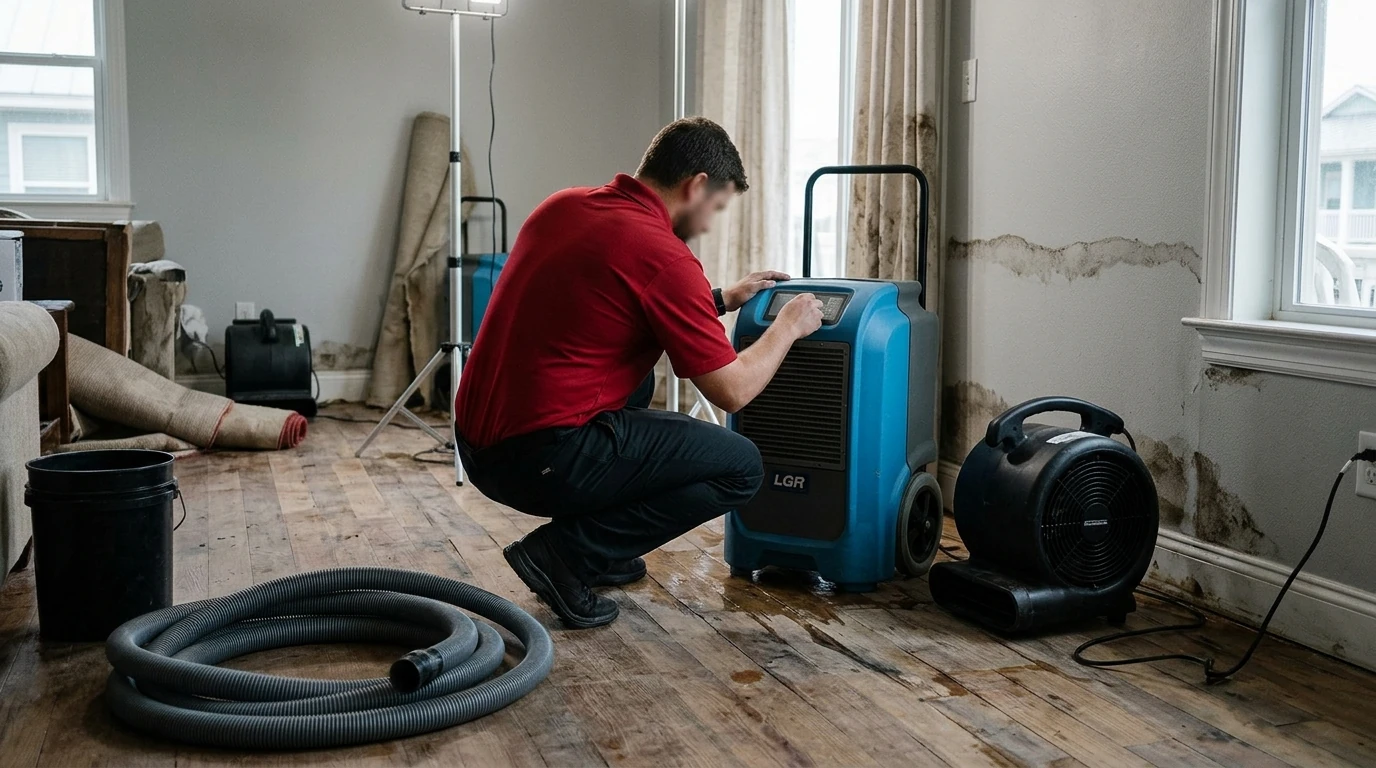
- Water extraction and structural drying. Air movers and dehumidifiers run for several days to bring wood framing and subfloor moisture content back to normal, following the IICRC S500 standard.
- Debris removal and demolition. Damaged drywall, insulation, flooring, and storm debris get removed and disposed of.
- Insurance claim coordination. The restoration company’s documentation and scope of work support the adjuster’s estimate.
- Reconstruction. Framing, drywall, roofing, and finish work rebuild the structure to pre-loss condition or current code.
What should you do first if your home just took storm damage?
Get the structure stabilized before anything else: a tarp on an open roof or board on a broken window stops secondary water and wind damage from multiplying the final bill.
After that, document the damage with photos before cleanup starts, then get a written scope from a licensed restoration contractor rather than relying on a verbal estimate. Ready.gov’s hurricane preparedness guide is also worth reviewing before the next named storm, since pre-storm prep (tie-downs, shutters, flood barriers) is the cheapest mitigation of all.
HomeLyft Restoration Gulfport handles emergency tarping, water extraction, debris removal, and reconstruction as one coordinated job rather than separate contractors, which keeps the insurance documentation consistent from the first call through the final repair. Schedule a storm damage assessment before small damage turns into a bigger repair bill.
About HomeLyft Restoration Gulfport
HomeLyft Restoration Gulfport is an IICRC Certified Firm serving Gulfport, MS and the surrounding Mississippi Gulf Coast since 2022 (license RO 2728). The crew holds IICRC WRT and ASD water restoration certifications along with Fortified Building Roofing MS Windstorm certification, and operates 24/7 for storm damage restoration, emergency board-up and tarping, water damage restoration, and reconstruction across Harrison County and neighboring communities.
Need help now? Call HomeLyft Restoration Gulfport at +12282845200.