
24/7 Emergency Water Removal & Cleanup in Bay St. Louis
24/7 emergency water removal & cleanup in Bay St. Louis, MS. IICRC-certified, insurance billing accepted. Call +12282845200.
Our IICRC-certified technicians are dispatched from our Gulfport, MS headquarters and are typically on-site in Bay St. Louis within 60 minutes of your call.
Water damage emergency in Bay St. Louis? We answer 24/7, so call now rather than waiting to see if a wet subfloor or soaked drywall dries on its own. Hancock County’s water table sits close to the surface along the Bay of St. Louis, and a slow leak here behaves differently than it would further inland: water wicks sideways through sandy soil and slab foundations faster than most homeowners expect, turning a small plumbing failure into a full-room extraction job within a day.
Why Bay St. Louis Properties See Water Damage Issues
A lot of the housing stock here falls into two categories: older raised or pier-and-beam homes near Old Town and the bayfront, built to let storm surge pass underneath, and newer slab-on-grade construction from the post-Katrina rebuild years. Both have their own water problems. Pier-and-beam crawlspaces trap humidity and standing water after heavy rain, and that moisture works its way up into subfloors before anyone notices a smell. Slab homes, on the other hand, hide plumbing leaks under the concrete itself, so by the time carpet or tile grout shows staining, water has often been sitting for days. Add in Gulf Coast humidity most of the year and afternoon thunderstorms that can dump an inch of rain in under an hour, and you get a region where water intrusion rarely stays contained to one room.
Our Water Extraction Process in Bay St. Louis
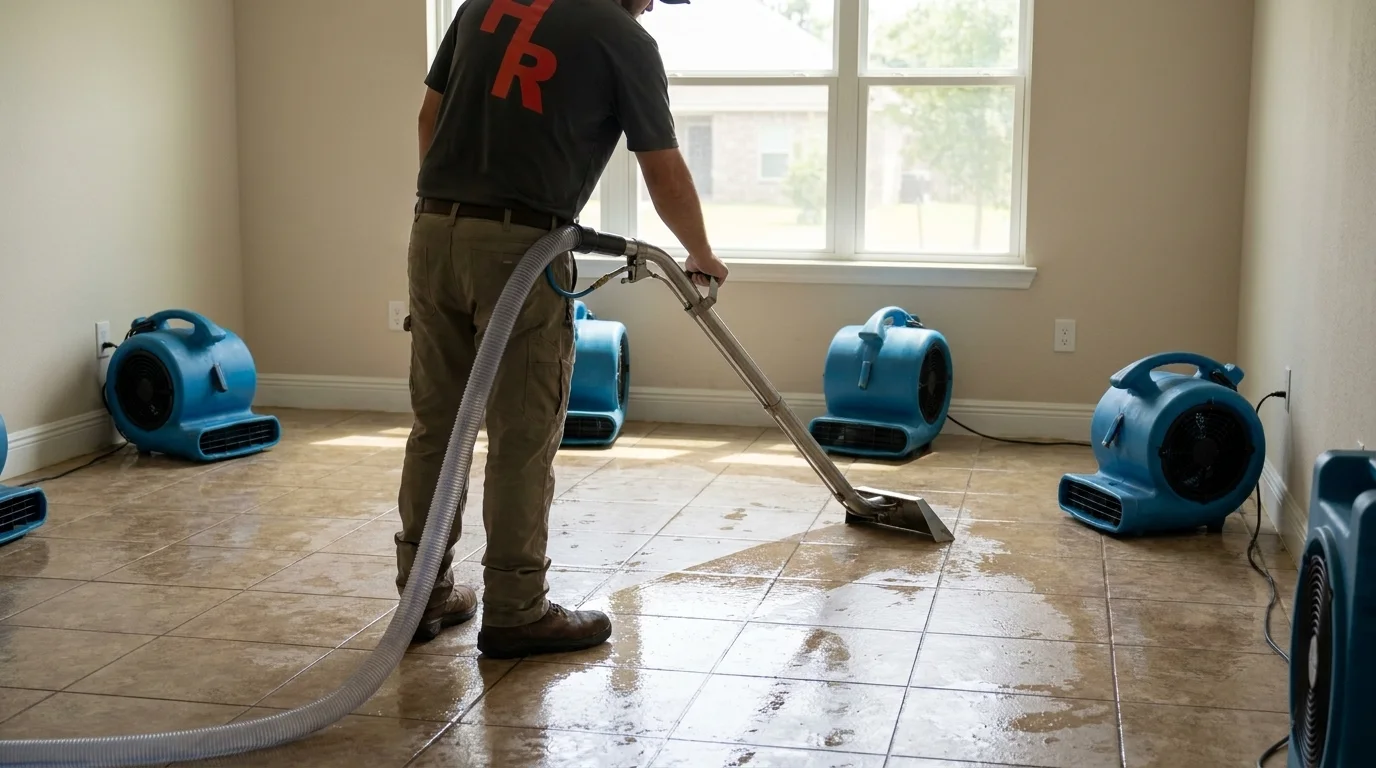
We start by identifying the water category and shutting off or capping the source, then move straight into extraction with truck-mounted and portable pumps depending on how much standing water we’re dealing with and whether the affected area is a crawlspace, slab, or finished living space. Because so many homes here sit on sandy or filled coastal soil, we pay close attention to what’s happening below the visible surface: moisture meters and infrared imaging tell us whether water has tracked into wall cavities or under cabinetry before we commit to a drying plan. Structural drying follows the IICRC S500 standard, with air movers and dehumidifiers sized to the humidity load, which in Hancock County during summer months runs noticeably higher than drying calculations built for drier climates.
Reaching Bay St. Louis from Gulfport
Our crews run Highway 90 and I-10 between Gulfport and Bay St. Louis regularly, which keeps us familiar with the bayfront neighborhoods, the Old Town district, and the residential streets back from the water where drainage tends to back up first after a storm. We call ahead before arrival so you’re not waiting on us to figure out the address, and we bring enough extraction equipment on the first trip to avoid a second run back to Gulfport mid-job.
Bay St. Louis Insurance & HOA Coordination
Most water damage claims in this area involve either a homeowner’s policy or, for anything tied to storm surge or rising water, a separate flood policy through the National Flood Insurance Program, and adjusters want clear documentation of what was wet, how long it likely sat, and what was removed versus dried in place. We photograph and log moisture readings as we go so that paperwork lines up with what the adjuster sees on their end. For properties in HOA communities along the bay, we coordinate scheduling and any required access notices with property management before equipment goes in, since several of these communities have specific rules about contractor vehicles and noise during drying.
Local note
One thing that trips up a lot of out-of-town restoration crews: homes near the Bay of St. Louis often have crawlspace vents that were sealed or modified after Katrina-era rebuilds to meet updated flood venting requirements, which changes how air moves (or doesn’t move) under the house. Before we set up drying equipment in a crawlspace, we check whether those vents are functioning the way they were designed to, because a sealed or blocked vent can trap moisture indefinitely even after the standing water is gone.
If you’ve got standing water, a soaked crawlspace, or a slab leak anywhere in Bay St. Louis, call HomeLyft Restoration MS now. We’re licensed (#RO 2728), IICRC-trained in water mitigation and structural drying, and set up to handle extraction and drying for both the raised historic homes near Old Town and the newer slab construction further back from the bay.
Serving Bay St. Louis from our Gulfport headquarters — ★ 5.0 · 61 Google reviews
“Very knowledgeable and professional.” — Joshua, September 2026Read our reviews on Google →
emergency-water-removal in Bay St. Louis: Service Coverage
Frequently Asked Questions
How fast can you arrive for emergency-water-removal in Bay St. Louis?
How does Bay St. Louis's high water table affect standing water removal?
Are pier-and-beam homes near Old Town more prone to hidden water damage?
Does Hancock County flood insurance affect how you document a water removal job?
What equipment do you use for slab leaks in Bay St. Louis homes?
How fast can your crew get from Gulfport to a water emergency in Bay St. Louis?
emergency-water-removal response in Bay St. Louis
Most Bay St. Louis calls see a technician on-site within 60 minutes from our Gulfport headquarters.