
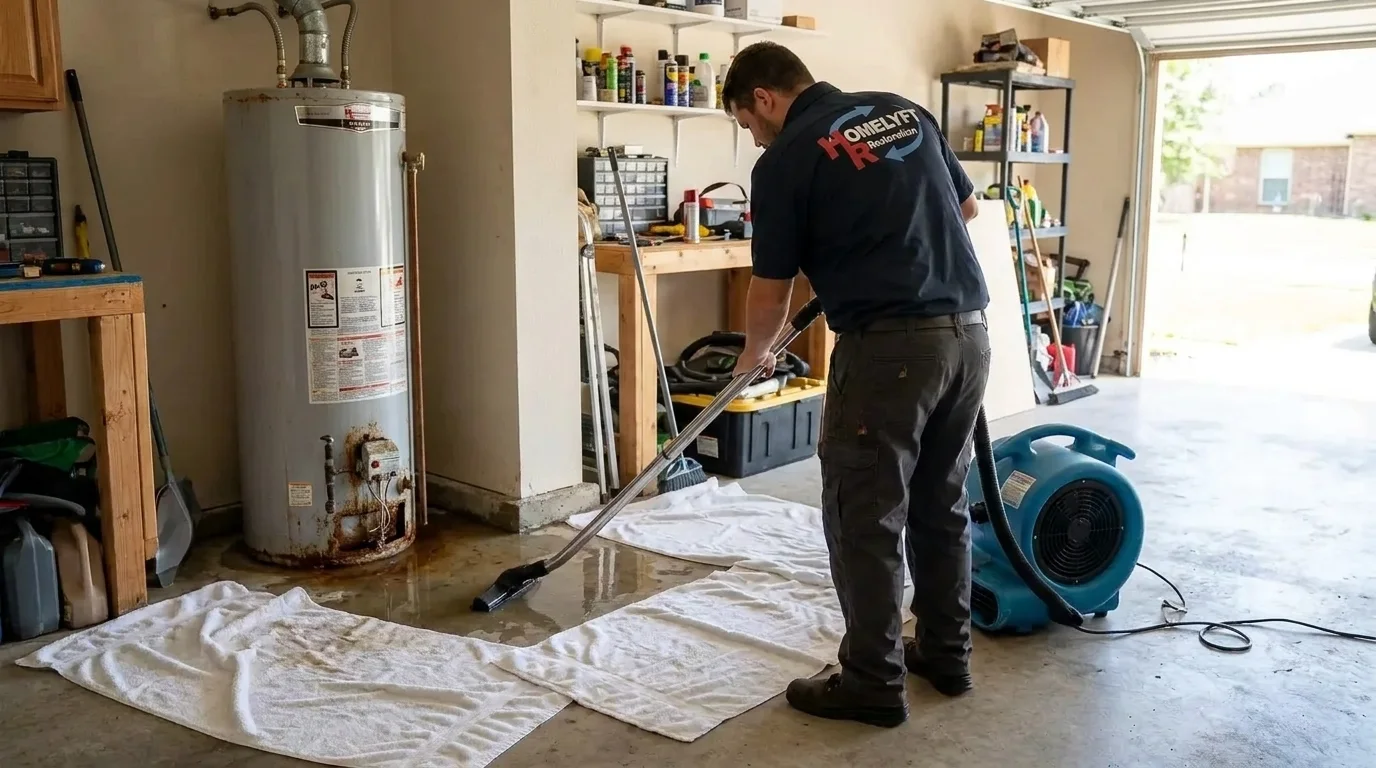
24/7 Emergency Water Heater Flood Cleanup in Gulfport
24/7 emergency water heater flood cleanup in Gulfport and surrounding areas. IICRC-certified, insurance billing accepted. Call +12282845200.
Water heater burst in Gulfport? A failed tank can empty 30 to 50 gallons onto your flooring in minutes, and if the unit sits in a closet, garage, or attic, that water often travels into wall cavities and subfloor before anyone notices. We answer 24/7, and we’re often the first call homeowners make once they’ve shut off the supply line and realized the puddle is bigger than a mop can handle.
What water heater flood cleanup actually involves
A water heater failure is rarely a simple mop-up. Tanks fail in a few predictable ways: a corroded tank seam splits, the pressure relief valve sticks open, or a supply line fitting lets go after years of mineral buildup. Whatever the cause, the water is usually clean (Category 1) if caught immediately, but it doesn’t stay that way. Once water sits against drywall, baseboard, or subfloor for more than 24 to 48 hours, it starts picking up contaminants from building materials and shifts toward Category 2. The timeline matters because it determines whether we’re drying in place or removing and replacing materials.
Because water heaters are often installed in closets, garages, or attic platforms, the damage pattern is different from a typical pipe break. Water tends to pool under the unit, wick sideways into adjacent flooring, and in attic installations, drip through ceiling insulation and drywall into the room below before anyone upstairs even knows there’s a problem. Equipment on these jobs typically includes submersible pumps or wet vacs for standing water, moisture meters to map how far the water traveled, and in attic or multi-level cases, borescopes or thermal imaging to check inside wall and ceiling cavities without opening them unnecessarily.
Our process
- Shut down the source. We confirm the water supply to the tank is off and, if the unit is gas or electric, that power or gas is isolated before anyone works near standing water.
- Extract standing water. Pumps and wet vacs remove bulk water from the utility closet, garage floor, or the room below an attic installation, prioritizing areas where water is pooling against baseboards or flooring seams.
- Map the spread. Moisture meters and, where needed, thermal imaging identify how far water traveled under flooring, behind the water heater enclosure, or into the ceiling and insulation of the room below.
- Dry and monitor. Air movers and dehumidifiers are set based on the moisture map, not guesswork, and we track readings daily until the affected materials hit dry standard under the IICRC S500 guidelines.
- Reassemble or refer out. Once drying is confirmed, we close out the structural side; replacement of the water heater itself is handled by a licensed plumber, which we’re glad to coordinate around.
What separates a good water heater response from a bad one
The most common mistake on these jobs is treating a water heater leak like a simple spill. A tech who just runs a fan over the visible wet spot without checking what’s behind the unit or under the subfloor leaves hidden moisture to feed mold growth for weeks before it surfaces as a smell or a soft spot in the flooring. This is especially common with water heaters installed over finished space or in closets backed against bedrooms, where the leak path isn’t obvious from the room where the water heater sits.
Adjusters reviewing these claims also look closely at cause of loss. A sudden tank rupture is typically treated differently than a slow leak from a corroded fitting that’s been dripping for months, which can affect coverage. Documentation matters here: photos of the failure point, moisture readings at intake, and a clear scope of what was wet versus what was replaced out of caution all support a cleaner claim.
What does water heater flood cleanup cost?
Costs depend heavily on how long the leak ran before discovery and where the water heater is located relative to finished living space. A leak caught within hours in a utility closet costs far less to resolve than one that’s been dripping into an attic for weeks. Every loss gets a written scope before work begins, since the right approach for a garage slab leak is very different from an attic installation over a bedroom ceiling.
| Scenario | Typical range |
|---|---|
| Leak confined to utility closet, caught early | $400 - $1,200 |
| Garage floor flooding with minor drywall contact | $800 - $2,000 |
| Water heater burst affecting adjacent rooms | $1,500 - $4,000 |
| Attic water heater leak with ceiling/floor damage below | $2,500 - $6,000 |
| Extended slow leak with hidden mold growth | $3,000 - $7,500 |
Homeowners insurance typically covers sudden and accidental water heater failures, including the resulting structural drying and repair, though coverage for a slowly leaking or neglected unit can be limited depending on the policy. We work with all major carriers and provide the documentation adjusters need to move the claim along.
Seasonal & regional considerations
Gulfport’s humidity means any moisture left behind after a water heater leak has a head start on mold growth compared to drier climates, especially in closed-up closets and attics where airflow is already poor. Hard water and sediment buildup are common across the Gulf Coast and accelerate tank corrosion, so older units are more prone to sudden failure. Hurricane season power outages can also stress electric water heater elements when service is restored, which is worth keeping in mind if your unit is already older.
Service area
We respond to water heater leaks and failures throughout Gulfport and surrounding Harrison County, including Biloxi, Long Beach, and the surrounding coastal communities.
If your water heater is leaking, has burst, or you’ve found standing water you can’t explain, shut off the supply line and call us to schedule your water heater leak assessment before the damage spreads further than the floor in front of it.
Services We Handle
- Flood Cleanup
Frequently Asked Questions
Does homeowners insurance cover water heater flood cleanup?
My water heater is leaking but the floor still looks dry. Could there already be damage?
How is cleanup different when the water heater is in the attic versus a garage or closet?
How long does drying take after a water heater burst or leak?
Do I need to replace the water heater myself before cleanup starts?
Looking for the best water heater flood cleanup company in Gulfport?
HomeLyft Restoration MS provides licensed and insured water heater flood cleanup in Gulfport, MS and the surrounding area, and has served local property owners since 2022. Customers rate us 5.0 out of 5 stars across 67 Google reviews. We answer calls 24/7 — call +12282845200 for immediate help.
Need Water Heater Flood Cleanup now?
We respond 24/7 across Gulfport and surrounding MS cities.
Related Coverage
- Our Restoration Services
- Contact HomeLyft Restoration MS
- Restoration Services in Agricola
- Restoration Services in Bay St. Louis
- Restoration Services in Benndale
- Restoration Services in Big Point
- Restoration Services in Biloxi
- Restoration Services in D'Iberville
- Restoration Services in DeLisle
- Restoration Services in Diamondhead
- Restoration Services in Eastabuchie
- Restoration Services in Ellisville
- Restoration Services in Escatawpa
- Restoration Services in Gautier