
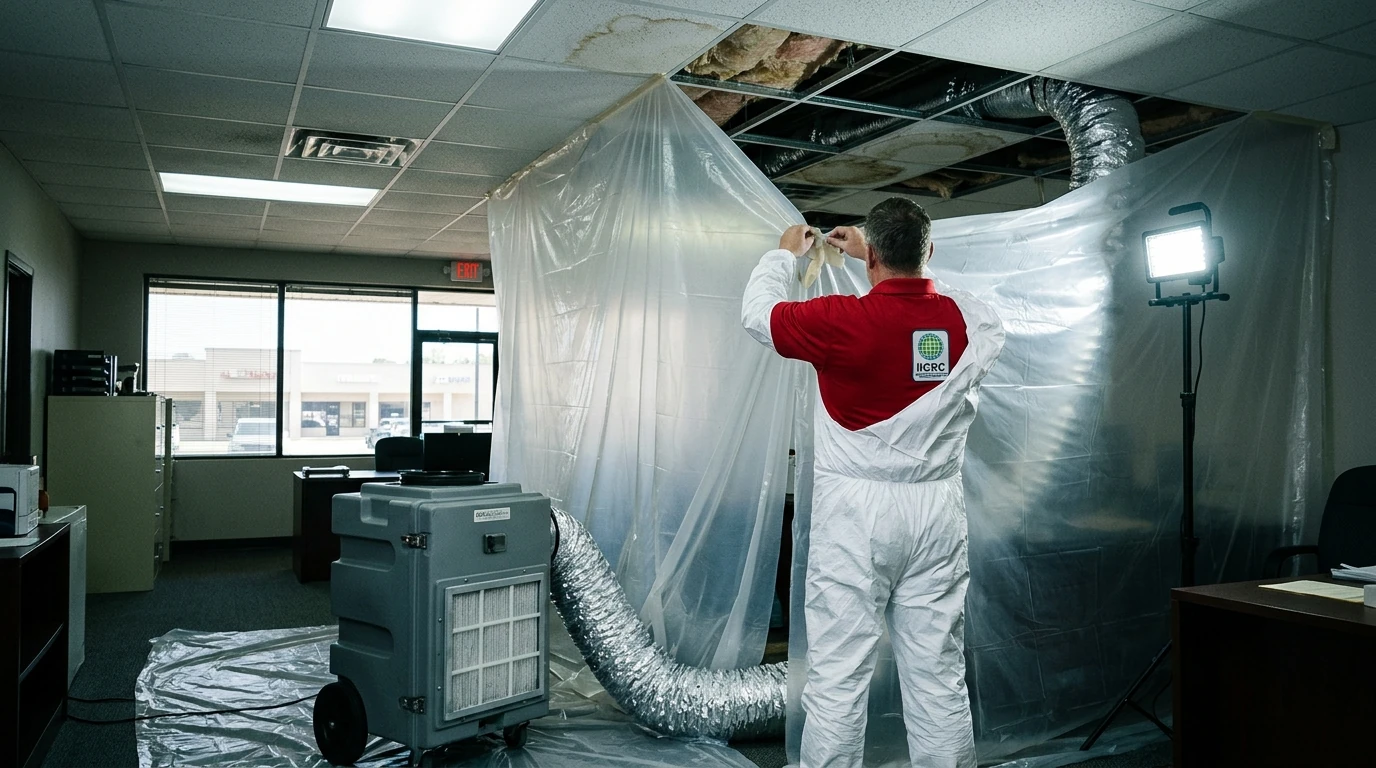
TL;DR: Commercial mold remediation in Gulfport, MS typically costs $1,500 to $4,000 for a small, isolated area and can run $15,000 to $40,000 or more for a large building with widespread growth or contaminated ductwork. The biggest cost drivers are square footage, whether the HVAC system is involved, and how much of the work has to happen around operating hours instead of after close. Post-remediation clearance testing usually adds $400 to $900 per visit.
If a tenant just reported a musty smell near the break room, or your insurance adjuster flagged ceiling tile staining during a routine walk-through, you’re probably trying to figure out whether this is a $2,000 problem or a $20,000 problem before you call anyone. The honest answer is: it depends on how far the moisture traveled and whether your HVAC system is circulating it. Here’s how commercial mold remediation is actually priced on the Mississippi Gulf Coast.
What Does Commercial Mold Remediation Cost in Gulfport, MS?
Most Gulfport businesses pay between $1,500 and $12,000 for commercial mold remediation, with large or HVAC-involved jobs running considerably higher. Price scales with square footage, the number of rooms affected, and whether containment has to be rebuilt each night to keep the space usable during business hours.
| Scope | Typical Cost Range |
|---|---|
| Small office or retail unit, isolated area (under 500 sq ft) | $1,500 - $4,000 |
| Multi-room commercial space (500-2,000 sq ft) | $4,000 - $12,000 |
| HVAC system and ductwork remediation | $3,000 - $8,000 |
| Mold inspection / air and surface sampling only | $300 - $700 |
| Post-remediation clearance testing (per visit) | $400 - $900 |
| Large building, warehouse, or widespread contamination | $15,000 - $40,000+ |
These are typical industry ranges for the Gulf Coast market, not a quote. Every building is different, and a written scope of work after an on-site assessment is the only way to get an accurate number for your property.
What Drives the Price of Commercial Mold Remediation?
Five factors move the number more than anything else: how much square footage is affected, whether the HVAC system is contaminated, what materials got wet, how long the moisture sat before anyone noticed, and how accessible the space is for containment.
Ceiling tile and HVAC involvement is the biggest swing factor in commercial buildings. A dropped ceiling with contaminated tiles usually means removing and replacing the tiles themselves (cheap, fast) plus inspecting the plenum space above for condensation or a slow roof leak (not cheap, not fast). If spores have moved through supply or return ducts, the job expands into duct cleaning or partial duct replacement, which is why that line item alone can run $3,000 to $8,000.
Porous materials, carpet, drywall, ceiling tile, insulation, almost always get removed rather than cleaned once mold has established itself, per the ANSI/IICRC S520 Standard for Professional Mold Remediation. That demolition and disposal cost scales directly with square footage and how many layers of material are involved.
How Do Crews Work Around Tenants and Business Hours?
Most commercial mold jobs in Gulfport happen in phases, sealed off with negative-pressure containment, so the rest of the building can stay open while one section is being treated. Containment barriers go up around the affected area with the HVAC zone shut down or isolated, and work often shifts to evenings or weekends for retail and restaurant spaces that can’t close during the day.
This phased approach costs more in labor hours than a straightforward residential job where the crew has the whole house to themselves. A restaurant kitchen, a dental office, or a retail storefront on a Highway 49 strip center typically needs after-hours scheduling at least for the noisiest demolition work, which is one reason commercial estimates run higher per square foot than a comparable homeowner job.
Does Commercial Property Insurance Cover Mold Remediation?
Commercial property policies generally cover mold remediation only when it results from a sudden, covered event, like a burst supply line or a storm-damaged roof, not from long-term humidity or a maintenance issue the building owner should have caught. Many commercial policies also cap mold coverage at a specific dollar amount regardless of the actual remediation cost, so it’s worth checking your policy’s mold endorsement limit before you assume a loss is fully covered.
Documentation matters here more than almost anywhere else in the claim. Photos of the source, moisture readings, and a written inspection report tie the mold directly to a covered event, which is the piece adjusters look for first. The EPA’s guidance on mold in buildings is a useful baseline for understanding why prompt mitigation protects both the building and the claim: mold can begin growing within 24 to 48 hours of a water intrusion, so a faster response generally means less material to remove and a stronger case that the loss was sudden rather than neglected.
What Happens During the Remediation Process?
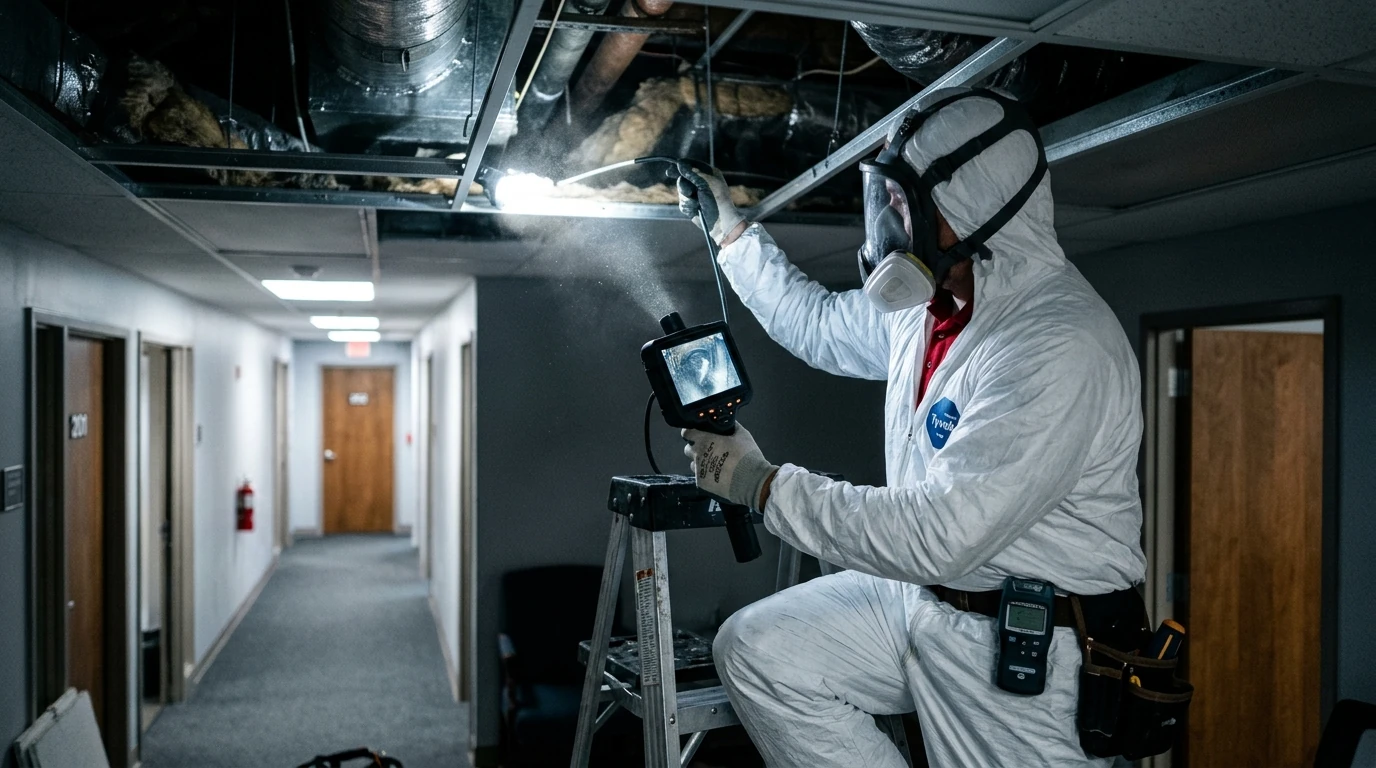
Commercial mold remediation follows a set sequence: inspection and moisture mapping, containment setup, source correction, removal of contaminated materials, HEPA cleaning, and a final clearance check.
- Inspection and moisture mapping identifies the source and how far it has spread, often with a borescope for wall cavities and ceiling plenums.
- Containment seals the work area with poly sheeting and negative air pressure so spores don’t migrate to unaffected parts of the building.
- Source correction fixes the actual moisture problem (the leak, the HVAC condensation issue, the roof penetration) before any cleanup starts, since remediation without fixing the source is a temporary fix.
- Removal and cleaning takes out porous, contaminated materials and HEPA-vacuums and wipes down non-porous surfaces.
- Drying and air scrubbing brings humidity down and runs HEPA air scrubbers to clear airborne spore counts.
- Clearance testing confirms the space is ready to reopen or rebuild.
When Do You Need Post-Remediation Clearance Testing?
Clearance testing is typically required before a contaminated area reopens to tenants, employees, or the public, and it’s often requested directly by an insurance carrier or a landlord before releasing final payment on the job. A third-party industrial hygienist usually performs this step independently of the remediation crew to avoid a conflict of interest, comparing indoor air and surface samples against outdoor baseline readings.
Budget $400 to $900 per clearance visit, and plan for the possibility of a second round if the first test doesn’t pass. For a multi-tenant commercial building, a documented clearance report is also useful proof for future lease disputes or resale due diligence.
If you’re trying to scope a mold problem in a Gulfport storefront, office, or hospitality property before it gets in front of an adjuster or a lease renewal, schedule a mold inspection first. An assessment gives you real numbers tied to your specific building instead of a range pulled from a blog post. For businesses already seeing visible growth or a confirmed moisture source, commercial mold remediation and broader commercial restoration services cover everything from containment through final clearance. For the full breakdown of how commercial mold jobs typically unfold on the Coast, see our related guide on commercial mold remediation.
For businesses in Gulfport dealing with an active mold problem, HomeLyft Restoration Gulfport provides on-site assessments and a written scope before any remediation work begins, so the number you’re quoted matches the building you actually have. Call HomeLyft Restoration Gulfport at (228) 284-5200 to schedule a commercial mold assessment.
About HomeLyft Restoration Gulfport
HomeLyft Restoration Gulfport is an IICRC Certified Firm serving Gulfport, Mississippi and the surrounding Gulf Coast since 2022 (license RO 2728). Their technicians hold IICRC AMRT mold remediation certification along with WRT and ASD credentials, and the company handles mold remediation, mold inspection and testing, commercial restoration, water damage restoration, fire damage restoration, and reconstruction across the Mississippi Gulf Coast.