
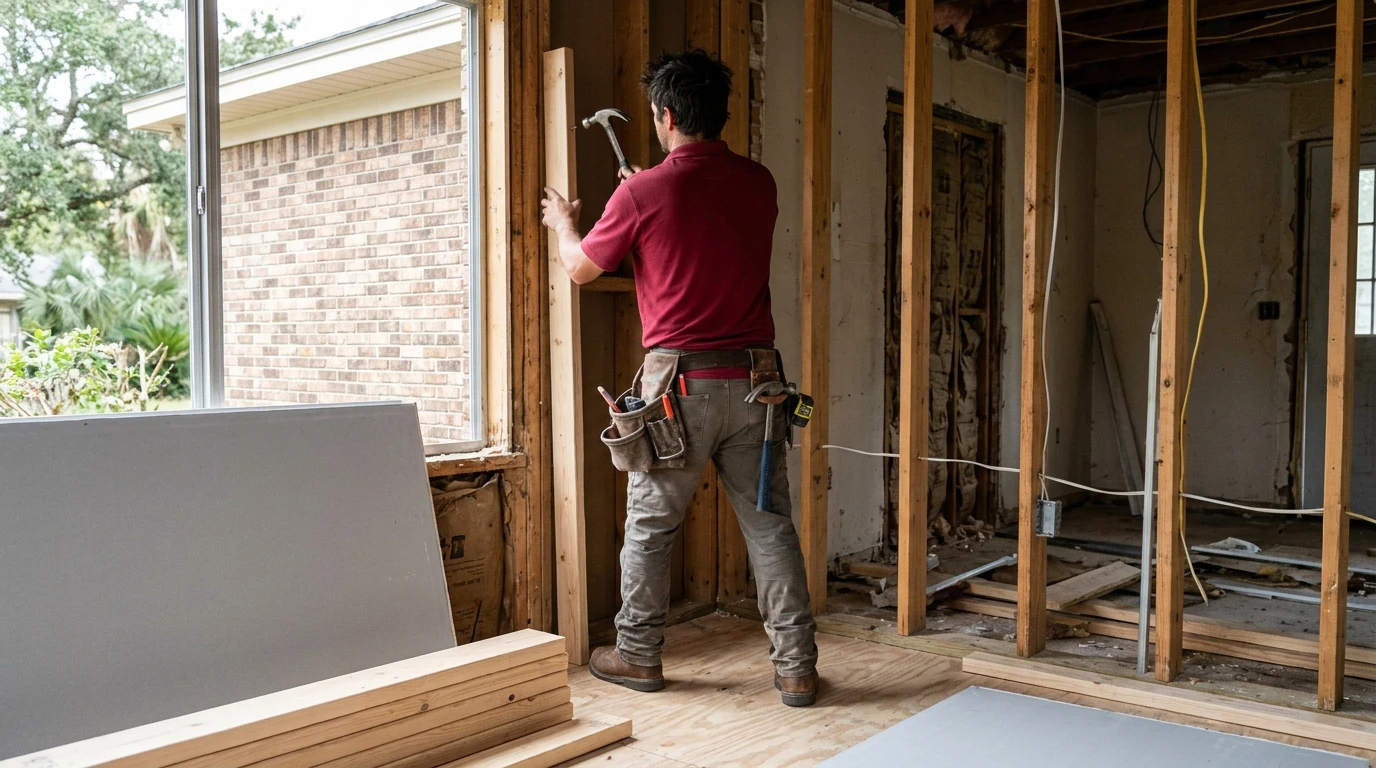
TL;DR: In Mississippi, reconstruction after storm, fire, or water damage typically costs $8,000 to $150,000 or more, depending on how much of the structure needs to be rebuilt. A single damaged room with drywall, flooring, and trim runs toward the low end. A full structural rebuild after a hurricane or major fire runs toward the high end. Homeowners insurance usually covers reconstruction tied to a covered loss like wind or fire, but flood damage needs a separate flood policy.
If your adjuster just approved a claim and you’re staring at a scope of work that says “reconstruction” without a number attached, you’re not alone. Along the Gulf Coast, that word covers everything from replacing a few sheets of drywall after a slow leak to rebuilding framing and a roof deck after a named storm tore through Gulfport or Biloxi. The price swings that wide because reconstruction isn’t one job. It’s whatever has to happen to put the structure back to pre-loss condition, and that scope is set by the damage, not a price list.
How much does reconstruction cost in Mississippi?
Most Mississippi homeowners pay somewhere between $8,000 and $150,000 for reconstruction, with the final number driven almost entirely by scope: how many rooms, whether framing or just finishes were damaged, and whether the home needs code upgrades to be rebuilt to current standards.
A bathroom or bedroom with damaged drywall, flooring, and paint is a different project than a kitchen that lost cabinets and subfloor, and both are different from a home that lost a wall section or roof structure in a storm. The table below reflects typical ranges for Gulf Coast properties; your actual number comes from a written scope, not a quote over the phone.
| Scope | Typical Cost Range |
|---|---|
| Single room, cosmetic only (drywall, paint, trim, flooring) | $3,500 - $10,000 |
| Kitchen or bathroom rebuild (cabinets, fixtures, subfloor) | $15,000 - $45,000 |
| Multi-room reconstruction after water or fire damage | $25,000 - $75,000 |
| Structural repair (framing, roof decking, load-bearing walls) | $40,000 - $120,000 |
| Whole-house reconstruction after major storm or fire loss | $100,000 - $300,000+ |
| Code-upgrade work added to any of the above (elevation, wind bracing) | $5,000 - $30,000 added |
What drives the final reconstruction price?
The biggest cost drivers are how much structure is affected, what materials need matching, and whether the rebuild has to meet current building code. A cosmetic-only job stays cheap; anything touching framing, electrical, or plumbing gets expensive fast.
A few specifics that move the number on Mississippi Gulf Coast properties:
- Structural vs. cosmetic damage. Replacing drywall and flooring costs far less than replacing wall studs, roof trusses, or subfloor joists.
- Code upgrades. Homes rebuilt after a covered loss in flood zones or windstorm areas often have to meet current International Code Council standards even if the original structure predates them, which can mean elevation changes or added wind bracing that weren’t in the original build.
- Material matching. Brick veneer, specialty siding, or older trim profiles common on Coast homes can cost more to match than to simply replace with standard materials.
- Mold or moisture remediation first. If the damage sat before it was addressed, mold remediation often has to finish before framing and drywall can go back in, which adds time and cost ahead of the rebuild itself.
- Permitting and inspections. Structural work in Harrison and Jackson County typically requires permits and multiple inspections, which add both cost and timeline.
Our reconstruction case study walks through what one of these multi-trade jobs actually looks like from demo to final walkthrough.
Does homeowners insurance cover reconstruction?
Most homeowners policies cover reconstruction tied to a sudden, covered loss, such as wind damage, fire, or a burst pipe, but they do not cover flood damage or damage from gradual deterioration. That distinction matters more on the Mississippi Gulf Coast than almost anywhere else in the country.
Wind and fire losses are typically covered under a standard homeowners policy, subject to your deductible (which is often percentage-based for named storms on Coast properties, not a flat dollar figure). Flood damage, including storm surge and rising water, requires a separate flood policy through the National Flood Insurance Program or a private flood carrier; a standard homeowners policy will deny that claim outright. The Insurance Information Institute has a clear breakdown of which disaster types fall under which policy type.
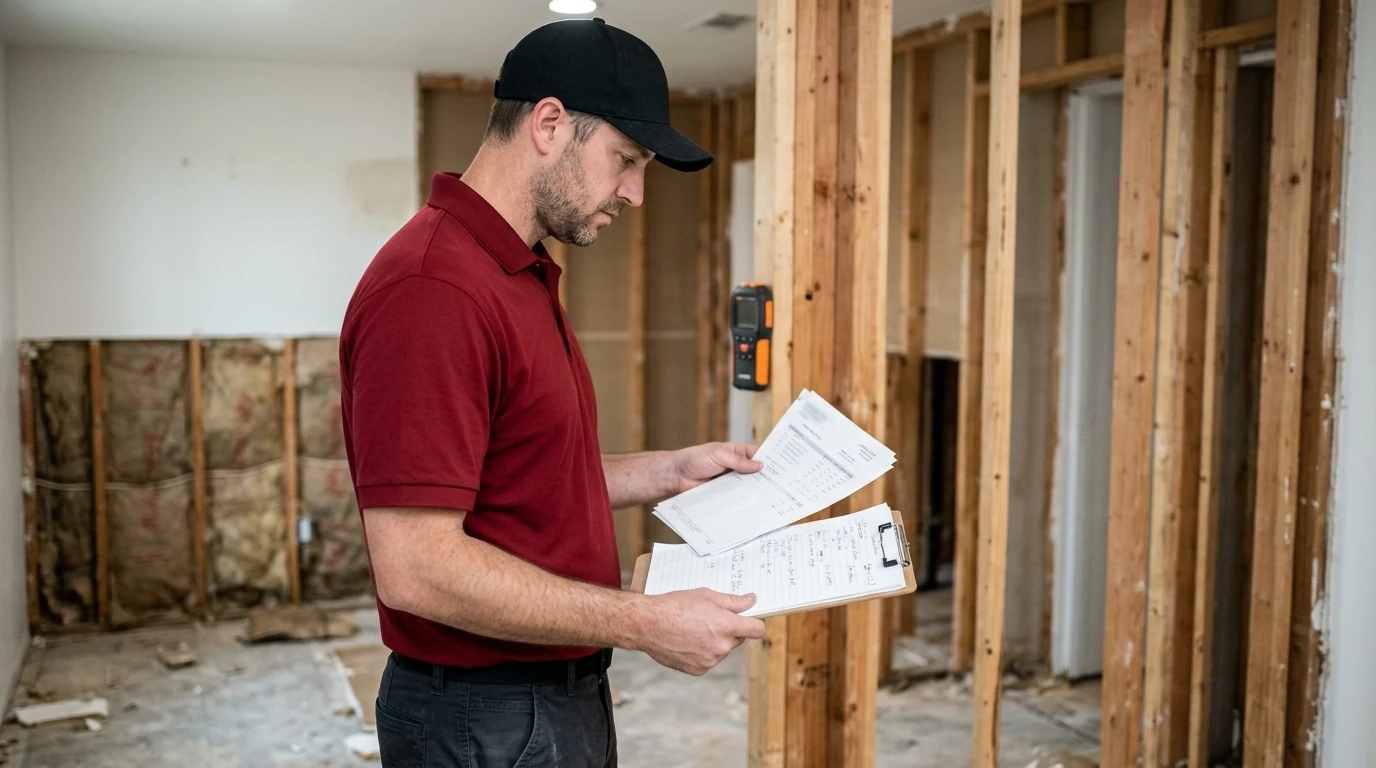
What protects a reconstruction claim either way is documentation: photos of the damage before any demo, a detailed itemized scope of work, and receipts for anything paid out of pocket. HomeLyft Restoration Gulfport builds that documentation into the estimate from the first site visit, which is what adjusters are actually looking for when they review a reconstruction claim.
What does the reconstruction process actually involve?
Reconstruction runs through a defined sequence, from assessment to final walkthrough, and skipping a step is usually what causes rework later.
- Damage assessment and scope. A written scope documents what’s damaged, what’s salvageable, and what has to come out.
- Insurance documentation. Photos, moisture readings, and an itemized estimate go to the adjuster before demo starts.
- Demolition and mitigation. Damaged materials come out; if water or mold is present, drying or remediation happens before rebuild begins.
- Permitting. Structural or electrical/plumbing work typically requires a permit pulled before framing starts.
- Framing and structural repair. Load-bearing elements, roof decking, and subfloor get rebuilt to current code.
- Rough-in. Electrical, plumbing, and HVAC get reconnected or rerouted as needed.
- Drywall, paint, flooring, and trim. The finish work that makes the space livable again.
- Final walkthrough and inspection. Sign-off from the local building department and a final check against the original scope.
Our reconstruction services page covers how this sequence connects with general contracting and roofing when a job needs both trade categories.
What should you do before getting a reconstruction estimate?
Start with a written scope of damage before you call a contractor for pricing, because an accurate number depends on knowing exactly what needs to be rebuilt, not a guess from a phone description.
Take photos of every damaged area before anything is moved or demolished. If the damage came from a storm or fire, check whether your policy’s wind deductible or fire coverage applies before assuming it’s a flood exclusion. Every loss is different, and HomeLyft Restoration Gulfport provides a written scope of work before any reconstruction begins, so the estimate reflects the actual damage rather than a flat per-square-foot guess.
If your property took on damage from a recent storm, our storm damage restoration cost guide covers the mitigation side that often happens before reconstruction starts.
About HomeLyft Restoration Gulfport
HomeLyft Restoration Gulfport is an IICRC Certified Firm serving Gulfport, Mississippi and the surrounding Gulf Coast since 2022 (license RO 2728). Their crews hold IICRC certifications in water restoration, structural drying, fire and smoke restoration, and mold remediation, along with Fortified Building wind-mitigation certification, and handle reconstruction, general contracting, roofing, water damage restoration, fire damage restoration, storm damage restoration, and mold remediation across the region.
Need help now? Call HomeLyft Restoration Gulfport at +12282845200.